
The Employer’s Guide to Malaysia Statutory Contributions: EPF, SOCSO, EIS, HRDF, and More


The Employer’s Guide to Malaysia Statutory Contributions: EPF, SOCSO, EIS, HRDF, and More

Key Takeaways
- Malaysian statutory contributions are not optional – every employer must handle EPF, SOCSO, EIS, and HRDF correctly or face back payments, fines, and audits.
- EPF is a retirement fund with mandatory employer and employee shares; foreign nationals are generally exempt unless they opt in.
- SOCSO provides workplace injury and invalidity coverage, with different rules for Malaysian employees, permanent residents, and foreign workers.
- EIS (Employment Insurance System) adds a small levy that funds re-employment support, but it only applies to Malaysian citizens and permanent residents.
- HRDF levy applies to employers with 10 or more Malaysian workers and finances training – missing it can lead to license renewal issues.
- Using a local Employer of Record platform like MalayHire EOR can compress the entire registration, payroll deduction, and remittance process into a 48-hour onboarding with zero missed deadlines.
- Contribution caps and salary ceilings (RM4,000 for SOCSO/EIS, higher for EPF) mean high earners trigger different calculations you must handle accurately.
- Keeping detailed, audit-ready records for each contribution type is not optional – it’s the single best defence during a surprise compliance review.

Why Malaysia’s Statutory Contributions Are the First Thing Employers Must Get Right
Hiring in Malaysia is an exciting move – the talent pool is deep, digital infrastructure is solid, and the cost-to-expertise ratio often surprises new entrants. But before you think about office locations or team culture, you need to park yourself firmly in the world of statutory contributions. If you’re an employer here, you are legally responsible for registering your company and each employee with four distinct schemes: the Employees Provident Fund (EPF), the Social Security Organisation (SOCSO), the Employment Insurance System (EIS), and the Human Resources Development Fund (HRDF). Add monthly income tax deductions (PCB) on top, and you have a maze that can overwhelm even experienced finance teams. This guide to Malaysia statutory contributions for employers strips away the noise and gives you exactly what you need to build a compliant, efficient payroll process. We’ll walk through the rates, the ceilings, the exemptions that catch foreign employers off guard, and how a modern EOR compresses the entire setup into a clean, 48-hour workflow. Whether you’re an SME founder onboarding your first Malaysian employee or a mid-market HR leader scaling a team of fifty, the rules are the same – and the penalties for getting them wrong are not something you want to test.
The Four Pillars of Malaysian Statutory Contributions
Every employer in Malaysia, regardless of size or industry, must navigate a quartet of mandatory contributions. These aren’t simply payroll deductions; they’re long-term social safety nets, workplace protections, and skills development levies. The moment you have even one employee (local or foreign, with some nuances), your obligations kick in. Let’s break down each pillar so you know exactly what you’re funding and why.
Employees Provident Fund (EPF): The Retirement Blueprint
EPF is the big one – a compulsory retirement savings scheme that acts like a forced savings plan for Malaysian citizens and permanent residents. Every month, both employer and employee contribute a percentage of the employee’s wage. The standard employer rate is 13% for monthly wages of RM5,000 and below, dropping to 12% for wages above RM5,000. The employee chips in 11% of their salary, though they can voluntarily increase this. These funds go into individual EPF accounts, earn dividends, and become accessible at retirement age or under specific withdrawal conditions. For employers, the key is accuracy: miscalculating or paying late attracts not only penalties but also a Dividend Compensation charge – essentially the interest your employee lost because you were slow. Foreign employees are not required to contribute to EPF; they can opt in voluntarily, but the employer is not mandated to make contributions for them. This exemption is a frequent point of confusion: many foreign employers mistakenly enrol expatriates, creating unnecessary administrative work and potential reclaim hassles.
Social Security Organisation (SOCSO): Covering Bodies, Not Just Paychecks
SOCSO operates under two main schemes: the Employment Injury Insurance Scheme and the Invalidity Pension Scheme. For Malaysian employees and permanent residents, the combined contribution rate is 1.75% of their monthly wage from the employer and 0.5% from the employee, all calculated on a wage ceiling of RM4,000 per month. If an employee earns above that ceiling, contributions are capped at the RM4,000 threshold – but you still need to calculate correctly. SOCSO protects workers from accidents, occupational diseases, and invalidity, providing medical benefits, temporary disablement payments, and pensions. The employer carries the heavier share, which makes sense: safe work is an employer’s extended responsibility. Foreign workers are covered only under the Employment Injury Scheme, attracting an employer contribution of 1.25% with no employee deduction. Get these classifications wrong and you’ll either under-insure a local hire or waste money on a scheme a foreign employee can’t even claim from.
Employment Insurance System (EIS): A Small Fee for a Big Safety Net
EIS is the newest member of the statutory family, introduced to provide temporary financial assistance and job-seeking support to workers who lose their jobs. The contribution is refreshingly simple: both employer and employee pay 0.2% each of the employee’s monthly wage, again capped at a ceiling of RM4,000. The total monthly contribution from the employer’s side is rarely more than RM8 per employee. However, EIS only covers Malaysian citizens and permanent residents. If you’re hiring a foreign talent on an Employment Pass, you don’t need to register or contribute for EIS. Failing to register local employees, though, is a compliance red flag that labour inspectors specifically look for. An EOR platform automates this split, ensuring local hires are enrolled on day one and foreign employees are correctly excluded.
Human Resources Development Fund (HRDF): The Training Levy Many Forget
HRDF is a levy imposed on employers in certain industries to encourage workforce training and skills upgrading. If you have 10 or more Malaysian employees, you must register with HRDF and pay a levy of 1% of each eligible employee’s monthly wages. For employers with 5 to 9 Malaysian employees, a reduced levy of 0.5% applies in selected sectors. The key detail: HRDF applies only to Malaysian citizens and permanent residents, so your foreign hires aren’t factored into the headcount or wage base. This levy is not a deduction from the employee’s salary – it’s entirely an employer expense. The funds can later be claimed back for approved training programmes, turning it into a strategic rebate system if you invest in upskilling your team. Still, many foreign companies overlook HRDF entirely, especially if they’re operating through a non-local entity and don’t have a physical office. A local EOR, however, automatically includes HRDF registration and monthly submissions as part of its compliance package.
Understanding Contribution Calculations and Salary Ceilings
Knowing the rates is one thing; applying them correctly to a real payroll is another. Malaysia’s statutory system uses salary ceilings that change the math for higher earners, and missing these thresholds can lead to over- or under-contribution – both of which spell trouble during an audit. Let’s walk through how the numbers actually work in practice.
How EPF Contributions Are Calculated
EPF contributions are straightforward for most salaries. Take an employee earning RM4,000 per month. The employer’s share at 13% equals RM520, and the employee’s 11% equals RM440, totalling RM960 added to the employee’s retirement account that month. If the employee earns RM7,000, the employer rate drops to 12% after the RM5,000 threshold – so that’s RM840 from the employer and RM770 from the employee. Note that EPF doesn’t have a wage ceiling for contribution purposes; the full salary is always used. The difference in rate alone means you must adjust for every employee crossing the RM5,000 mark. An EOR’s automated payroll engine handles these tiered rates seamlessly, but manual spreadsheets often introduce errors that compound month after month.
The SOCSO and EIS Wage Ceilings in Practice
SOCSO and EIS both cap insurable wages at RM4,000 per month. If a Malaysian employee earns RM6,000, you still calculate SOCSO and EIS contributions as if they earned only RM4,000. For SOCSO, the employer pays 1.75% x RM4,000 = RM70, and the employee 0.5% x RM4,000 = RM20. EIS adds a tiny RM8 employer and RM8 employee. Once you have multiple high earners, the capped amounts remain constant, making payroll more predictable. However, misclassifying a permanent resident as a foreign worker or placing a foreign employee under the full SOCSO scheme instead of the employment-injury-only rate quickly leads to discrepancies. Always verify nationality and residency status at the point of onboarding and feed that data directly into your payroll system.
HRDF Levy Calculation Nuances
HRDF levy is based on the total monthly wages of all Malaysian employees, excluding foreign workers. If you employ 12 Malaysians with a combined monthly wage of RM60,000, your HRDF levy is 1% of that – RM600. The levy must be paid even if some of those employees are on probation, part-time, or remote. The calculation resets each month, so as your headcount fluctuates, so does your levy. When you engage a local EOR, the levy is calculated, deducted, and remitted without you needing to maintain separate spreadsheets, saving you from accidentally underpaying and triggering a regulatory notice.
The Registration and Onboarding Timeline: From Zero to Compliant in 48 Hours
Getting registered for all four schemes can feel like a multi‑week paper chase, but it doesn’t have to be. With the right EOR partner, the registration process is compressed into a clear, two‑day timeline – exactly what MalayHire EOR delivers with its 48‑hour onboarding promise. Here’s how the sequence typically flows when you’re hiring without a local entity.
What You’ll Need to Get Started
Before the clock starts, you’ll gather basic information: employee full name as per MyKad or passport, MyKad number (for locals) or passport number (for foreigners), residential address, start date, and monthly salary. For the company side, you’ll provide your business registration details if you have a local entity, but if you’re using an EOR, the EOR’s own registered entity becomes the legal employer – your data requirements drop to a simple employee information form. The EOR then handles all interactions with EPF, SOCSO, EIS, and HRDF under its existing credentials.
Day 1: Initiating EPF and SOCSO Registrations
On the first day, the EOR submits employee registration forms to EPF and SOCSO through the respective online portals (i‑Akaun for EPF, ASSIST portal for SOCSO). Because an established EOR already has active employer accounts, new employee registrations are often approved within hours. Simultaneously, the EOR configures the employee’s contribution tier in its payroll system, factoring in nationality, salary band, and any EPF voluntary election. By end of Day 1, the employee has an EPF member number assigned and SOCSO coverage is active. The employer contribution accounts are set to start deductions from the first salary period.
Day 2: HRDF and EIS Registration Wrapped Up
If the new hire pushes the total Malaysian headcount to five or more (triggering HRDF registration for applicable sectors), the EOR registers the company’s eligible workforce with HRDF on Day 2. EIS enrolment is typically automatic when SOCSO registration is completed, but the EOR verifies that each local employee is reflected in the EIS portal. By the end of the second day, all four contributions are fully registered, payroll deductions are mapped, and the employee’s first payslip is ready to reflect accurate statutory lines. For foreign workers, the EOR ensures EPF and EIS are correctly omitted and SOCSO is set to employment‑injury‑only rates. This timeline isn’t theory; it’s the operational rhythm a specialised local EOR maintains because Malaysian statutory bodies now expect electronic submissions and issue reference numbers instantly.
Common Pitfalls for Foreign Employers
Even experienced global companies stumble on Malaysia’s statutory contributions because the rules treat local and foreign employees so differently. Let’s look at the most frequent mistakes and how to sidestep them.
- Enrolling foreign employees in EPF by default: Many employers assume all workers must have EPF. Foreign nationals are not required to participate, and if you deduct from their salary or contribute on their behalf without a voluntary election, you create a reimbursement headache and potential labour disputes.
- Applying full SOCSO rates to foreign workers: Foreign workers are only covered under the Employment Injury Insurance Scheme (1.25% employer, 0% employee). Registering them for the Invalidity Scheme charges you an unnecessary 1.75% and gives them access to a scheme they can’t legally claim from.
- Forgetting to register for EIS: EIS covers re‑employment support, but since it’s relatively new, some employers skip it for local hires. Missing EIS contributions triggers back‑payments and interest, and it’s easily caught during a SOCSO/EIS joint audit.
- Miscalculating HRDF levy based on total headcount instead of Malaysian headcount: Including foreign employees in the wage base inflates your levy and wastes money, while excluding Malaysian employees triggers underpayment. The line is clear once you know it, but many spreadsheets don’t make the distinction.
- Delaying registration beyond the first month of employment: You must register employees with EPF and SOCSO before their first contribution is due. Late registration penalties accumulate quickly, and some schemes impose a daily rate until you’re compliant.
- Ignoring salary ceilings for SOCSO/EIS: Applying the percentage to the full salary instead of the RM4,000 cap leads to over‑contributing. While it might seem harmless, it’s a compliance misstep and you may struggle to reclaim excess payments from the statutory bodies.
How an Employer of Record Turns Compliance Into a Competitive Advantage
When you hire through an EOR, the EOR becomes the legal employer for statutory purposes. This isn’t just a paperwork convenience – it transfers the entire compliance burden to a local entity that already has the registrations, the banking relationships, and the automated systems to handle contributions flawlessly. For foreign companies without a local entity, this is the only way to quickly hire and pay employees without violating Malaysian labour law.
Automated Payroll Deductions and Direct Remittance
A professional EOR’s payroll platform calculates EPF, SOCSO, EIS, and HRDF contributions automatically, based on the exact rules for each employee’s nationality and salary band. Contributions are deducted from the employee’s salary and remitted to the respective bodies before each deadline, accompanied by the required electronic submission. This eliminates the risk of manual calculation errors and ensures that contributions land exactly when they should – no late interest, no angry statutory notices.
Real‑Time Compliance Dashboard
Modern EORs such as MalayHire EOR provide a dashboard where you can view the contribution status of every employee, download monthly contribution statements, and track when payments were made. This means your finance team doesn’t need to log into three or four different government portals; everything is consolidated into one view. Come audit time, you export a single report instead of scrambling across systems.
Handling Foreign Employee Exemptions Seamlessly
The EOR’s payroll engine is pre‑configured to automatically flag a foreign employee and apply the correct SOCSO employment‑injury rate, skip EPF unless a voluntary election is signed, and exclude the worker from EIS and HRDF calculations. Your HR team doesn’t need to memorise these rules; the system simply does it. This guarantees that every payslip is compliant from day one, no exceptions.
Special Considerations for Expatriate Employees and High Earners
Expatriates, permanent residents, and senior executives earning well above the statutory ceilings bring a layer of nuance that often trips up even well‑run payroll departments. Getting these details right protects your company from under‑insurance claims and ensures your expats aren’t enrolled in schemes they can’t benefit from.
EPF and Expatriates: The Voluntary Option
A foreign national working in Malaysia on an Employment Pass is not mandated to contribute to EPF, and the employer is not required to contribute on their behalf. However, some expatriates choose to make voluntary contributions – a maximum of RM100,000 per year – to build a retirement fund in ringgit. If the employee opts for voluntary contributions, it’s a personal arrangement and your payroll must not automatically deduct the 11%. For permanent residents, the rules flip: they are treated like citizens and must be registered for EPF with full employer and employee contributions.
SOCSO Coverage for Foreign Talent
Even high‑paying expatriates are entitled to SOCSO’s Employment Injury Insurance, because workplace accidents don’t care about salary brackets. The employer contributes 1.25% on the RM4,000 wage ceiling, so the monthly cost is a flat RM50. This coverage is mandatory, and failing to register an expat for employment injury insurance can expose your company to unlimited liability if an accident occurs. On the other hand, the Invalidity Pension Scheme and EIS simply aren’t relevant for foreign workers, so don’t enrol them in those.
Income Tax (PCB) for Non‑Resident Employees
Monthly income tax deductions (PCB) apply to all employees, regardless of nationality, based on their expected annual chargeable income. However, a non‑resident employee is taxed at a flat 30% rate from the first ringgit unless they qualify for tax residency (generally by staying in Malaysia for more than 182 days in a calendar year). For expats who become tax residents, the normal progressive tax rates apply, and PCB deductions must be recalculated. An EOR handles tax residency tracking and adjusts PCB amounts accordingly, ensuring you never under‑deduct and face a large year‑end tax shortfall.
Expert Tips for Staying Compliant in 2025 and Beyond
Statutory contribution rules in Malaysia are fairly stable, but compliance is a moving target because your workforce composition changes, salary bands shift, and government portals occasionally update submission formats. The employers who sail through audits are the ones who build repeatable processes. Here are the tactics that work.
Automate Contributions Through a Trusted Platform
Manual calculation is the enemy of accuracy. A payroll system that integrates directly with EPF, SOCSO, and LHDN (Inland Revenue Board) e‑filing reduces human touchpoints to near zero. If you’re using an EOR, ensure their platform provides downloadable contribution summaries and real‑time sync with the statutory bodies so you always have a live snapshot of your compliance position.
Double‑Check SOCSO Classification for Each Employee
When onboarding, confirm each employee’s citizenship and residency status against original documents. Store those documents securely. Before generating the first payslip, verify that the SOCSO contribution is set to the full scheme (Malaysian/permanent resident) or employment injury only (foreign national). This one‑time check prevents months of incorrect contributions that can be painful to unwind.
Maintain Audit‑Ready Records
Every contribution payment should generate a record: the remittance slip, the portal confirmation, and the line item in your payroll ledger. For EPF, Form A (monthly contribution statement) is your proof. For SOCSO, the ASSIST portal provides a receipt. Organise these by month and by employee. If an auditor asks to see your last 12 months of EPF contributions, you should be able to produce the entire package in one PDF export, not a folder of screenshots.
- Keep digital copies of all registration confirmations (EPF member numbers, SOCSO employer code, HRDF registration certificate) in a central compliance folder.
- Set calendar reminders 3 business days before each statutory deadline to verify that contributions have been submitted – don’t rely on memory alone.
- If an employee’s salary changes (promotion, allowance adjustment mid‑month), immediately recalculate contributions; a salary change can bump them past the RM5,000 EPF threshold or alter PCB brackets.
- Conduct a quarterly internal audit: pick three random employees and manually recalculate their EPF, SOCSO, and EIS against payslip deductions, then match those figures to the remittance receipts.
Making Statutory Contributions a Non‑Issue for Your Business
By now you can see that Malaysia’s statutory contributions aren’t just a series of deductions – they’re the foundation of a lawful employment relationship. When they’re handled correctly, they fade into the background and you get to focus on growing your team and your business. When they’re handled poorly, they morph into back‑and‑forth with government agencies, uncomfortable conversations with employees, and a compliance record that makes future hiring harder. If you’re already considering an EOR to skip the local entity setup, choosing one that is deeply embedded in the Malaysian regulatory landscape – like MalayHire EOR, which bakes all four contributions into a fixed monthly fee starting at $165 per employee – turns what could be a multi‑week administrative burden into a checkbox on a digital dashboard. The result isn’t just speed; it’s the confidence that every ringgit remitted to EPF, every SOCSO injury scheme fee, and every HRDF levy is exactly where it should be, exactly when it’s due. That’s the benchmark for compliant hiring in Malaysia, and it’s fully achievable.
Frequently Asked Questions
How do I register for EPF, SOCSO, EIS, and HRDF as a new employer in Malaysia?
You must register your company with the Employees Provident Fund (EPF), PERKESO for SOCSO and EIS, and HRDF through their respective online portals. Each registration requires your business registration number, company details, and director information. Complete all registrations before your first employee's start date to remain compliant. The entire process typically takes under 48 hours if documents are ready.
What is the penalty for late payment of EPF contributions in Malaysia?
Late EPF contributions incur a penalty of 10% per annum on the overdue amount, charged on a daily basis. Additional fines and legal action can follow if payments remain overdue for more than six months. Directors may face personal liability for unpaid contributions. Always calculate using the employer's 13% and employee's 11% shares to avoid discrepancies.
Can foreign workers in Malaysia contribute to EPF or are they exempt?
Foreign workers and expatriates are not required to contribute to EPF unless they are Malaysian citizens or permanent residents. Employers may voluntarily opt to contribute on behalf of foreign staff, but this is not mandatory. SOCSO and EIS coverage for expatriates depends on their salary threshold and employment status. Verify eligibility with PERKESO before making assumptions.
What salary amount is used to calculate SOCSO and EIS contributions for each employee?
SOCSO and EIS contributions use the employee's monthly wages including basic salary, allowances, and commissions, capped at a salary ceiling. The ceiling is RM5,000 for SOCSO and RM5,000 for EIS as of 2025. Any income above this cap is excluded from contribution calculations. Review the latest wage ceiling table to ensure accurate deductions.
How are HRDF levies calculated and which employers must pay them?
HRDF levies are calculated at 1% of each employee's monthly salary for companies with 10 or more Malaysian employees. Employers with fewer than 10 employees may opt to register voluntarily, paying only 0.5% for certain categories. The levy applies only to Malaysian citizens and permanent residents, not foreign workers. Registration is mandatory for covered employers within a specific timeframe.
Do I need to submit separate payments for EPF, SOCSO, EIS, and HRDF each month?
Each statutory body requires separate monthly payment submissions, but you can simplify via third-party payroll providers or EOR services. EPF payments are due by the 15th of each month, while SOCSO, EIS, and HRDF have different deadlines. Missing any individual deadline triggers separate penalties. Automate reminders or use consolidated payroll software to avoid late filings.
What happens if I accidentally overpay my employee's statutory contributions in Malaysia?
Overpayments can be adjusted against future contribution months, but you must notify the relevant statutory body in writing first. Each agency has its own refund mechanism, and processing may take several weeks. Errors in salary calculations often cause overpayments, so double-check ceiling caps and rates monthly. Keep detailed records to support your adjustment request.
Is it possible to exclude overtime pay from statutory contribution calculations in Malaysia?
Overtime payments are generally included in the definition of wages for EPF, SOCSO, and EIS contributions, except for certain exempt allowances. You must include all regular overtime compensation when calculating monthly contributions. Only specific categories like travel allowances or medical benefits are excluded. Always review the latest wage definition guidelines from each body to ensure compliance.
MalayHire is your most cost-effective Employer of Record (EOR) in Malaysia
Hire full-time employees in Malaysia and save costs by avoiding hefty contractor fees. MalayHire handles payroll, employment contracts, statutory compliance (EPF, SOCSO, EIS), and HR admin. Start onboarding your Malaysian hire now, with MalayHire.
Trusted by global companies hiring in Malaysia





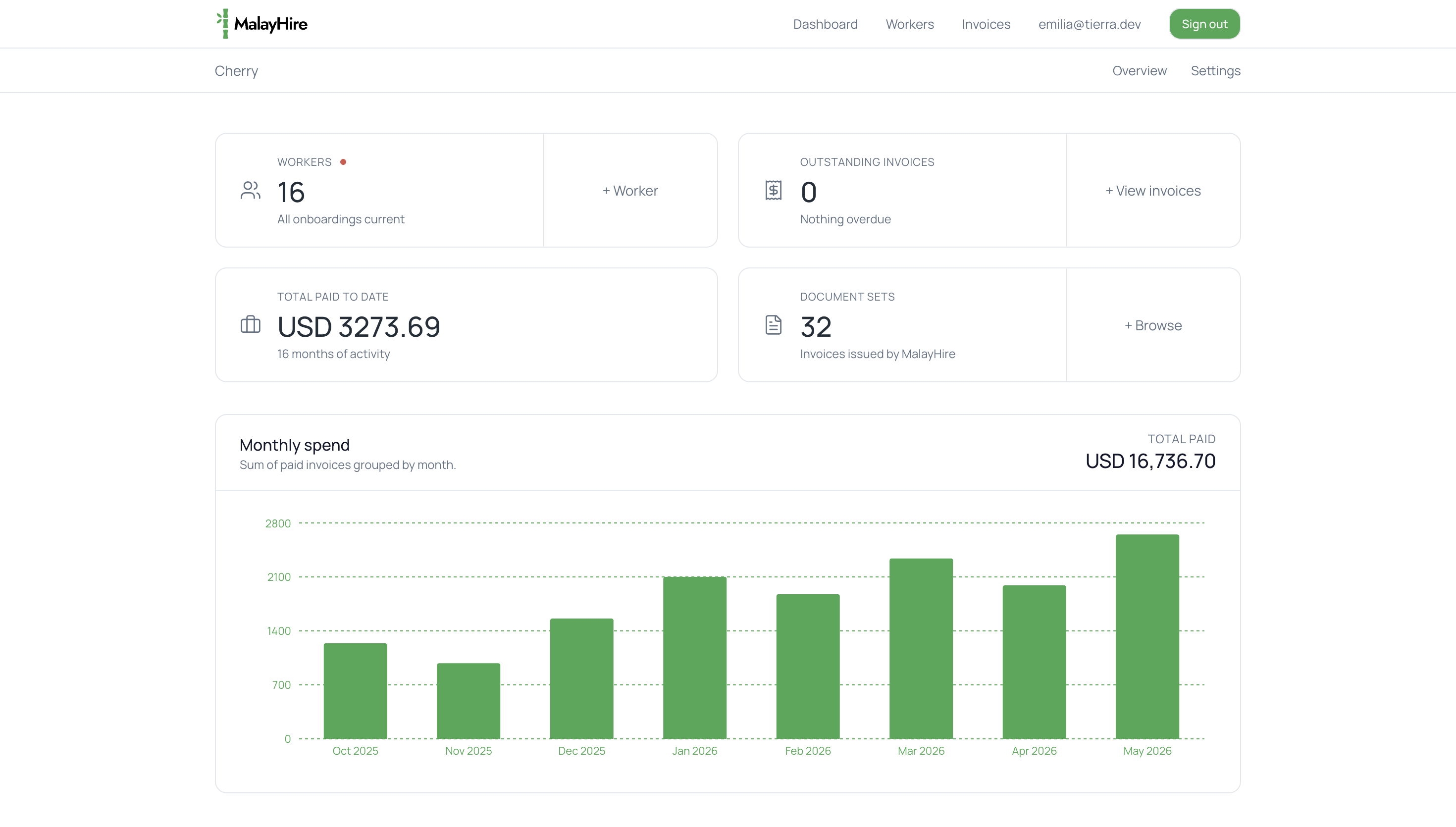
Manage your Malaysian team, payroll & EOR compliance in one place.